Light Spring
Warm and light, with enough clarity to carry color. Your palette is fresh and sunlit rather than heavy.
- Warm
- Light
- Coral
- Poppy Orange
- Ivory
Personal color analysis
Find out from one photo in 30 seconds.
Your photo stays on your phone. No account.
Free result · $9 once for the full palette · No subscription
Why it matters
No more clothes you bought, wore once, and never touched again.
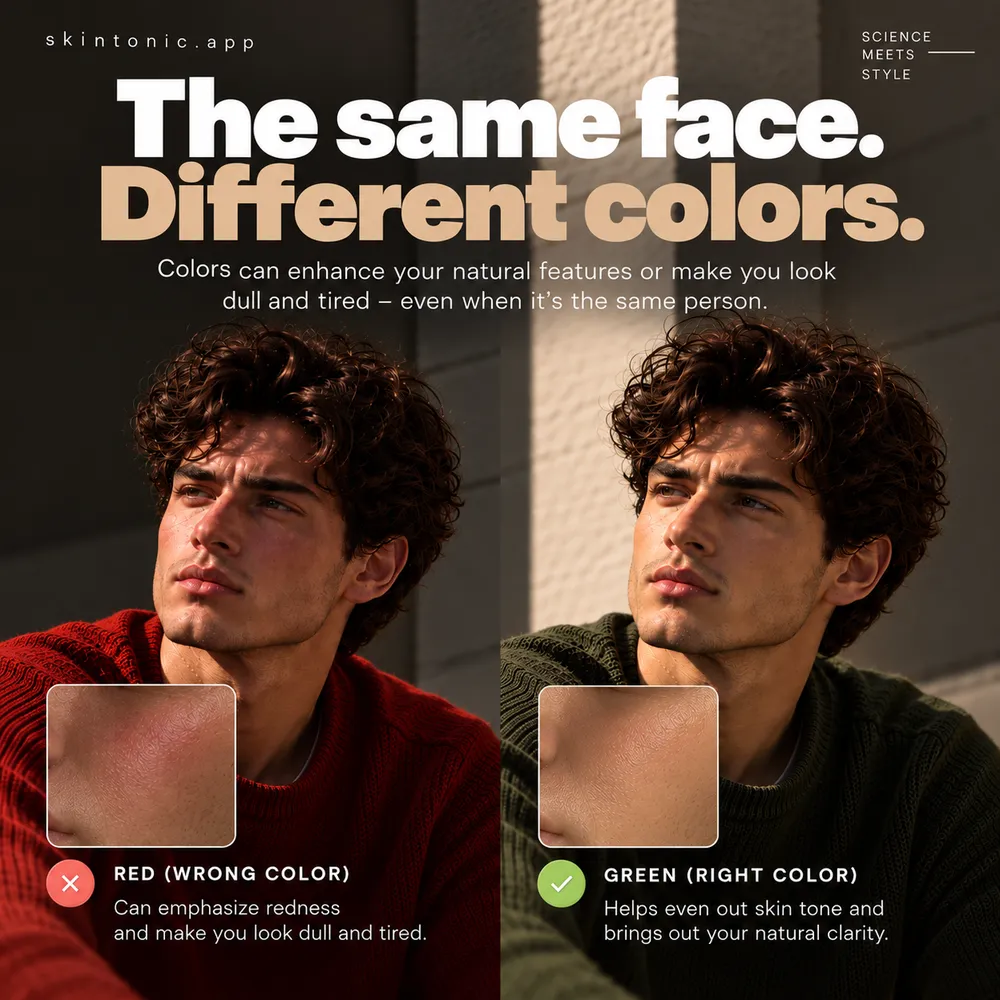
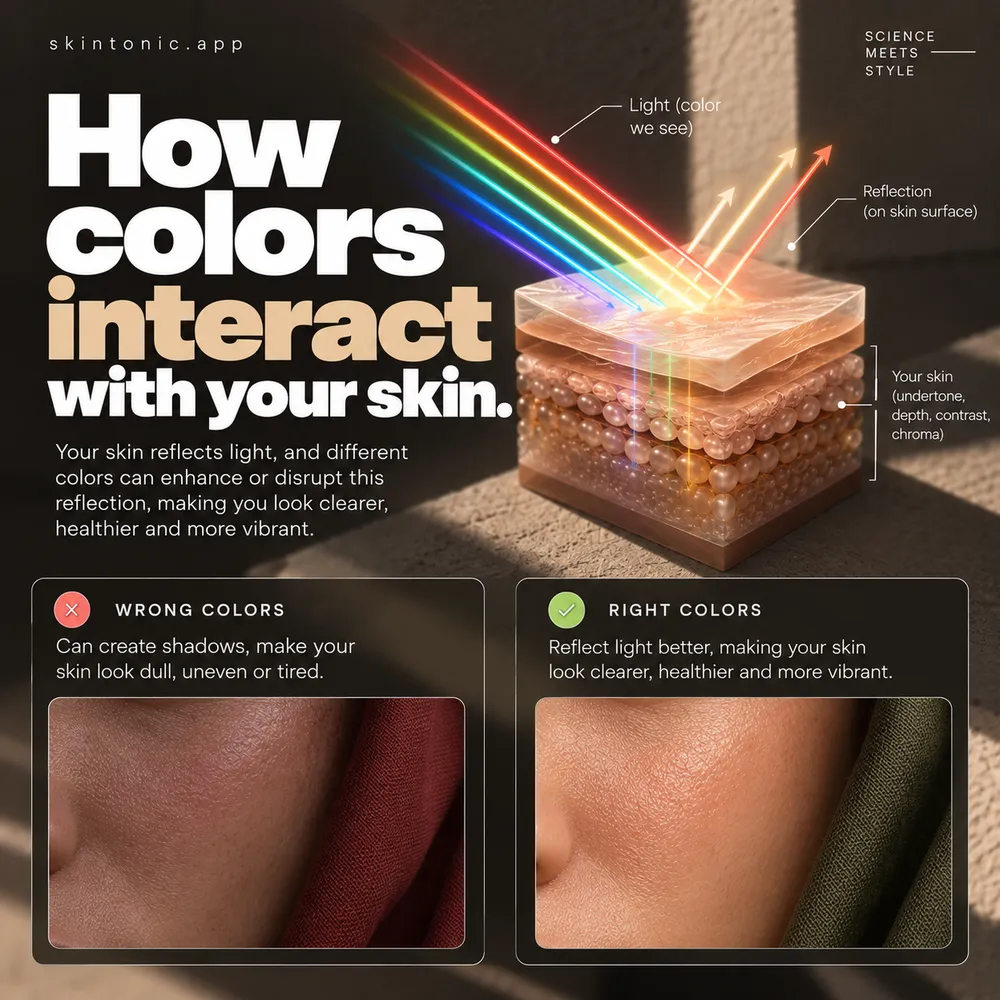
The color near your face decides if you look fresh or tired.
Walk into a store and skip most of it without trying anything on.
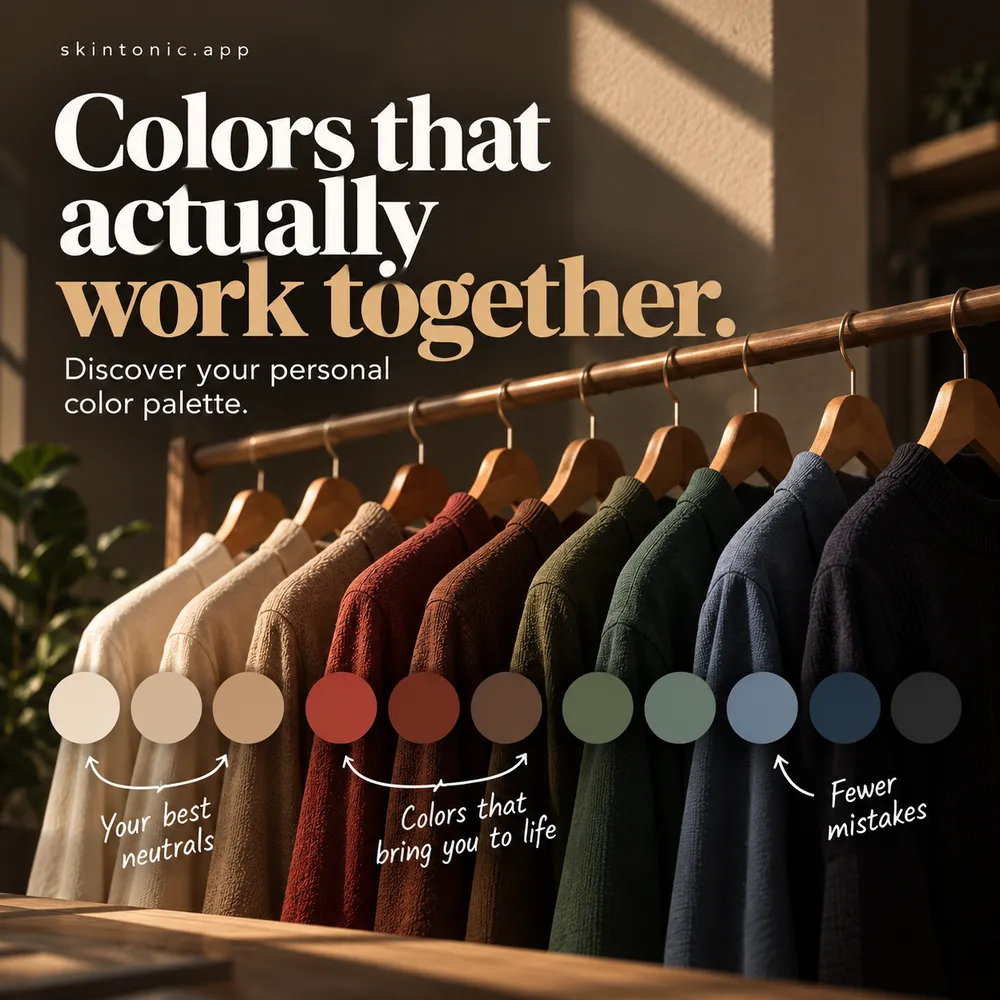
When all your clothes come from one palette, they go together on their own.
How it works
Face a window, no filter. It is read in your browser and never uploaded.
Your undertone, depth and contrast, with the reasoning shown — and a free preview of your colors.
All 25 colors, what to avoid, the outfit builder and a PDF to take shopping.
What you get
The free side is a real result, not a teaser with the answer taken out. You are told which of the twelve you are either way.
One payment. No trial, no subscription, nothing to cancel, and fourteen days to ask for it back.
Which one are you?
Every color below is a real swatch from that palette — the same hexes you get in your result.
Warm and light, with enough clarity to carry color. Your palette is fresh and sunlit rather than heavy.
Unmistakably warm, and clear with it. Golden, vivid colors read as natural on you where cool tones fight your skin.
Warm-leaning and genuinely bright. You can wear saturation that would overwhelm most people.
Cool and light, with a softness to it. Gentle, slightly greyed colors flatter you more than anything stark.
Cool through and through, and slightly muted. Blue-based colors sit naturally against your skin.
Cool and notably blended — the gentlest of the twelve. Dusty, low-saturation colors suit you best.
Warm but softened, with little contrast between your features. Muted earth tones are your natural territory.
Richly warm and muted. Golden, spiced, earthy colors look deliberate on you rather than heavy.
Warm and deep, with real weight to your coloring. You carry dark, saturated earth tones easily.
Cool and deep, with high contrast between your features. Dark, clear colors match that natural drama.
Purely cool and clear. Icy, saturated, high-contrast colors are where you look most yourself.
Cool and exceptionally clear. You can wear the most saturated colors in the whole system without being overwhelmed.
What decides your colors
Not a personality quiz. These are the four things an analyst looks at, and they are read from your skin, eyes and hair together — all three, not just your face.
Whether your skin leans warm and golden, cool and pink, or in between.
How light or deep your coloring is overall.
The gap between your lightest and darkest features, soft or strong.
How pure the color in you is. Muted coloring is worn down by a pure shade; clear coloring is flattened by a dusty one.
Privacy
That is not a promise to guard a server well. There is no server in this part of the product for your photo to sit on.
Accuracy
Everything is read from the color of your skin in the photo, so the light you took it in does most of the work.
If the photo comes out too dark, or carries a heavy warm cast, the result page says so before you read anything else and asks you to retake it in daylight. It never hides that and never blocks your result. And if you land close to the line between two neighboring types, a second photo in different light can tip it the other way — compare the two palettes and keep the one that looks right on you. All twelve types are set out here, and the undertone test covers the first of the four readings on its own.
The options
Three ways to find your colors, and they are not equivalent. Here is where each one is strongest.
| Question | Photo analysis (here) | In-person draping | Online quiz |
|---|---|---|---|
| Price | Free to see your type. $9 once for the whole palette. | Much the dearest of the three, and it swings widely by city and by analyst. | Usually nothing, though an email address is often the real price. |
| Time | About thirty seconds, whenever you feel like it. | A booked appointment, an hour or more in the chair, plus the journey. | A few minutes of multiple choice. |
| Where | Your own phone or laptop, at a window. | A studio, in person, under lighting chosen for the job. | Any browser. |
| What decides it | Measurement: the undertone, depth, contrast and chroma of three colors taken off your photo. | A trained eye watching real fabric against your face. Done well, this is the most precise of the three — more precise than any photo. | Your own answers about yourself, which is the softest input of the three. |
| What throws it off | Lamp light, filters and makeup. A dark or warm-cast frame is flagged and you are asked to shoot again. | Little, once you are sitting down. The variable is which analyst you booked. | How well anyone can judge their own skin from memory, which is harder than it sounds. |
| Privacy | The photo stays in your browser. No upload, no account, no email. | No photo to worry about, but a studio now holds your name and your payment details. | No photo either, though the result often sits behind a sign-up. |
| What you walk away with | Your type, 25 colors grouped by how to wear them, shades to avoid with reasons, an outfit builder and a PDF. | A conversation you can ask questions in, and usually fabric swatches to carry shopping. | A season name, and often a page trying to sell you something else. |
We are not going to pretend a photo beats a professional. If you want someone to hold cloth against your face and talk it through, book that. What this does is give you a measured answer in half a minute for nothing, which is a reasonable place to start — and the three options are compared in full here. If you arrived looking for the phrase people search with, what those tools do and what this one does instead is its own page.
$9once
You see your color type free. If you want the full palette, you pay once and it's yours.
Questions
Yes, and the free part is the answer itself: which of the twelve color types you are, the four readings that put you there, five of your twenty-five colors and two of the shades to avoid. No card, no account, no email. The $9 is only for the rest of the palette, and you decide after you have seen your type.
Good enough to put most people in the right family, and usually the right type within it, as long as the photo was taken in daylight. It is measurement, not opinion: three colors are read off your photo and compared on undertone, depth, contrast and chroma. What it cannot do is see you move, or hold eleven fabrics against your neck and change its mind. A trained analyst draping you in person can be more precise than this, and we would rather say that than pretend otherwise.
More than anything else you control. An ordinary indoor bulb can shift measured skin hue by more than the whole distance between cool and warm, so the same person can come back cool at a window and warm under a lamp. Face a window in daylight, skip the filter, and if the frame is too dark or too heavily warm the result page tells you so and asks you to take it again.
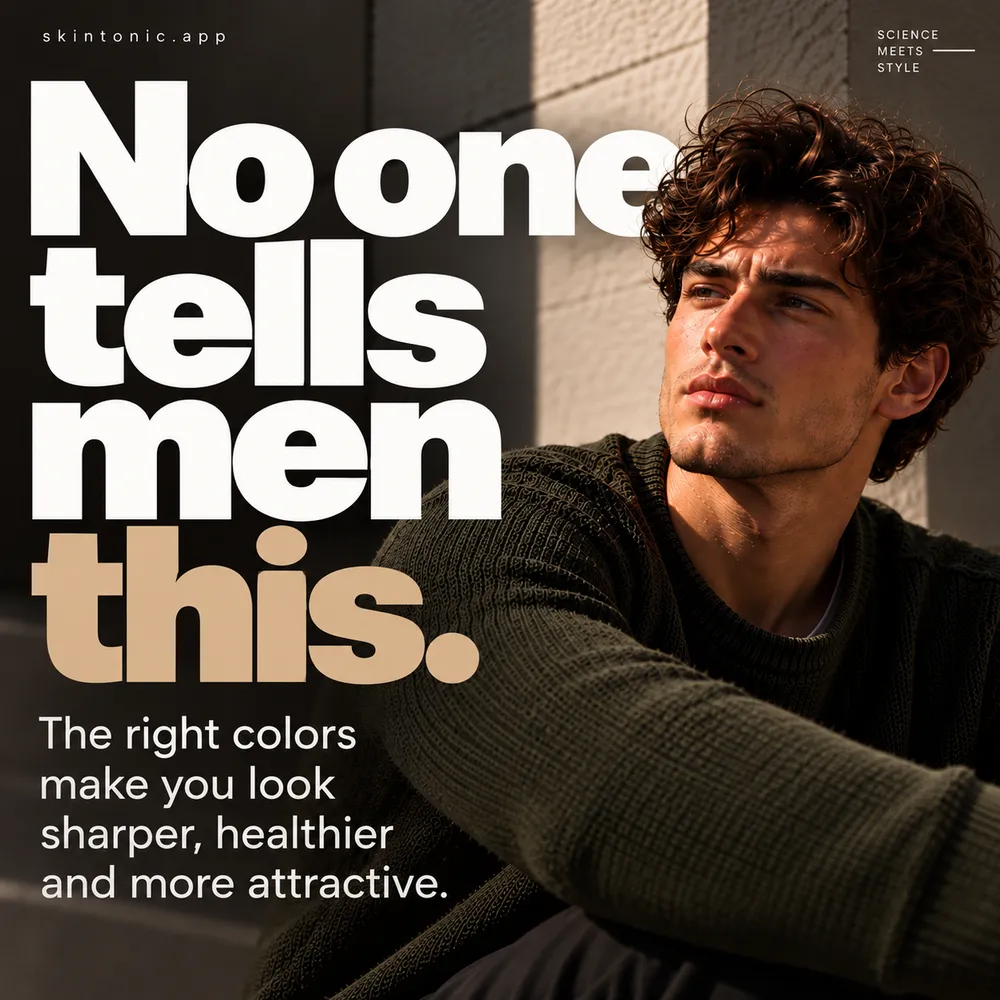
Yes, and nothing about it is different. Undertone, depth, contrast and chroma have no gender; the twelve types and the outfit builder are identical. Only the garments the colors land on change. There is a version of the explanation written for menswear if that is more useful.
It is built to. Undertone is read as the direction skin leans, not how light it is, so deep skin can be cool, warm or neutral exactly as fair skin can, and all four families contain deep types. The honest limitation is the camera rather than the method: phone cameras meter darker faces less reliably, so daylight and a plain background matter more, not less.
Four families — spring, summer, autumn and winter — each split three ways by whichever trait is most extreme, which gives twelve. So winter is true winter, bright winter and deep winter, and each of the three wants noticeably different colors. Every one of the twelve is set out here, with its real palette.
Plenty of people are, and the system will put you on one side of a line that is genuinely close. If a second photo in different light lands you on the neighboring type, open both palettes and keep the one that looks better on you — neighbors share most of their colors, so the cost of being on the wrong side of that line is small. Checking a single color against both is the quickest way to settle it.
No, and there is nowhere for it to be stored. Your browser opens the file, reads the pixels it needs and does the arithmetic on your device; the image is never uploaded and is deliberately left out of the little this site saves locally. Closing the tab discards it.
A quiz asks you to judge your own skin and then adds up your answers. This reads the colors instead, and shows you what it read so you can correct it before it decides. If you would rather answer questions, the quiz is here — it is just the weaker of the two inputs.
No account, ever, and no email address to hand over — your palette reopens with a short access code instead. If you did pay the $9 and it was not worth it, there are fourteen days to ask for it back and the refund policy says exactly how.

Free result · $9 once for the full palette · No subscription